

Nearly 40% of patients struggle to access the health devices they need — not because those devices aren’t covered, but because insurance policies are written in a way that makes it nearly impossible to know what you’re actually entitled to. That’s a problem we take personally.
Our team cuts through the jargon and translates your policy into plain language. We believe you shouldn’t need a healthcare law degree to understand your own benefits. From your first question to your final approval, we walk alongside you so nothing falls through the cracks.
Understanding your Durable Medical Equipment Insurance isn’t just about saving money — it’s about getting the tools your recovery actually depends on.
Key Takeaways
- We translate complex coverage terminology into clear, actionable guidance
- Every patient gets step-by-step support tailored to their specific situation
- Understanding your policy benefits puts you in control of your healthcare decisions
- We actively work to remove the bureaucratic barriers that delay access to essential devices
- Clear communication between you, your provider, and your insurer makes the entire process faster
Navigating the Basics of Durable Medical Equipment Insurance
Most people don’t think about their DME coverage until they suddenly need it — and by then, they’re dealing with a health challenge and a paperwork maze at the same time. That’s a stressful combination. Getting familiar with how durable medical insurance works before you’re in that position changes everything.
Defining Essential Medical Equipment
Not everything that helps you at home qualifies as durable medical equipment under an insurance policy. To meet the standard definition, a device must be prescribed by a physician, designed for repeated use, serve a clear medical purpose, and be appropriate for home use. Wheelchairs, hospital beds, oxygen concentrators, CPAP machines, and walkers typically check all of those boxes.
What doesn’t qualify is just as important to understand. Comfort items — even ones that genuinely improve daily life — rarely meet the medical necessity threshold insurers require. We help you determine upfront whether your specific equipment qualifies, so you’re not investing time in a claim that won’t be approved.
The Role of Insurance in Managing Healthcare Costs
The out-of-pocket cost of medical devices without coverage can be staggering. A power wheelchair can run $15,000 or more. Home oxygen equipment often involves both rental and supply costs that accumulate over months. DME insurance exists specifically to absorb that financial weight — but only if you know how to use it correctly.
Here’s how standard coverage typically breaks down by equipment category:
| Equipment Category | Primary Use | Coverage Status |
|---|---|---|
| Mobility Aids | Assisting with walking or movement | Usually Covered |
| Respiratory Devices | Supporting lung function | Typically Covered |
| Comfort Items | Improving daily convenience | Rarely Covered |
| Home Safety Tools | Preventing injury at home | Varies by Policy |
Evaluating Your Durable Medical Equipment Coverage Options
Not all DME coverage is built the same, and the differences between plan types can significantly affect both your access to equipment and what you end up paying out of pocket. Taking time to compare your options is worth every minute.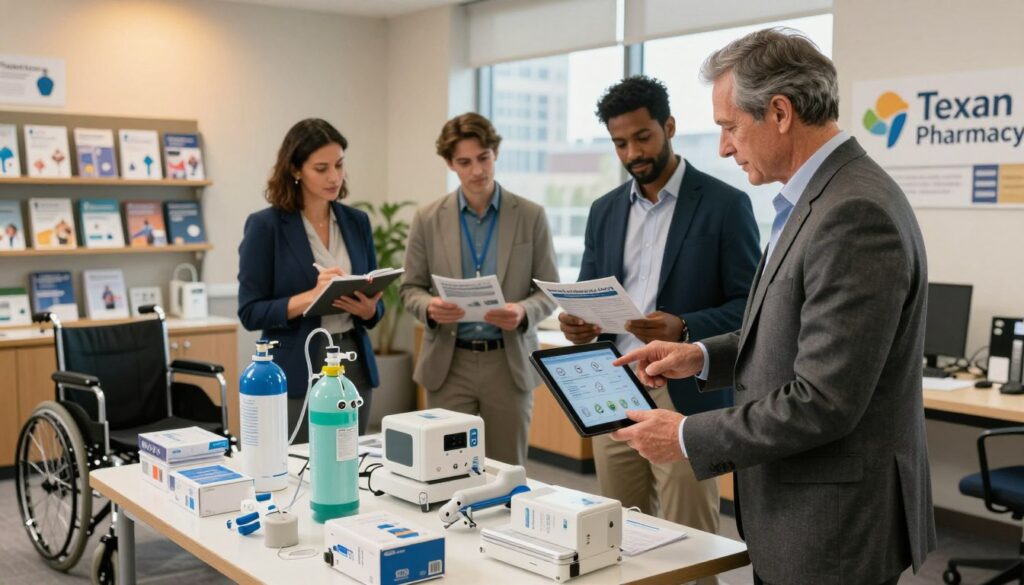
Distinguishing Between Medicare and Private Insurance Plans
Medicare follows federal guidelines, which means consistent rules but also rigid limits. Private insurers offer more flexibility in some areas, but that flexibility cuts both ways — coverage scope, network restrictions, and approval timelines vary widely from one carrier to the next.| Feature | Medicare | Private Insurance |
|---|---|---|
| Coverage Scope | Standardized federal rules | Varies by plan tier |
| Provider Network | Broad, national access | Often network-restricted |
| Approval Speed | Fixed processing times | Depends on carrier |
Identifying Necessary Documentation for Approval
Documentation is where most claims succeed or fail. A missing clinical note, an incomplete prescription, or a vague statement of medical necessity can delay your approval by weeks — or result in a denial that requires a full appeals process.“The quality of your documentation is the single most important factor in preventing claim denials and ensuring timely access to essential medical tools.”
The Importance of Physician Prescriptions
A valid physician prescription isn’t just helpful for DME coverage — it’s non-negotiable. Insurers won’t process a claim without one, and a prescription that doesn’t meet your insurer’s specific formatting or content requirements can be just as problematic as no prescription at all. We verify that your documentation satisfies every standard before it gets submitted, so you’re not losing time to avoidable rejections under your DME insurance plans.Understanding Medical Necessity Requirements
Beyond the prescription, you need clinical documentation that clearly establishes why the equipment is medically necessary for your specific condition — not just beneficial, but necessary. Vague language doesn’t hold up. Detailed clinical notes, diagnosis codes, and functional assessments give your claim the foundation it needs.
We work with your care team to ensure the supporting evidence is complete and speaks directly to your insurer’s requirements for durable medical equipment coverage.
Working with Durable Medical Equipment Insurance Providers
Even when your documentation is solid, navigating the claims process with durable medical equipment insurance providers requires persistence and a clear understanding of how the system works. Insurers have processes that favor the well-informed.Steps to Verify Your Specific Policy Benefits
Before committing to any equipment, verify your DME coverage details directly with your insurer. Review your summary of benefits, confirm your deductible and coinsurance structure, and find out whether prior authorization is required for your specific item. Skipping this step is one of the most common — and expensive — mistakes patients make.
We help you ask the right questions and document the answers, so there’s a clear record if a dispute arises later.
How We Assist You in Streamlining the Claims Process
Managing insurance paperwork while recovering from an illness or managing a chronic condition is genuinely exhausting. We take that administrative weight off your plate entirely. Our team handles coordination between your physician, your supplier, and your insurer — tracking every submission, following up on pending approvals, and pushing back on denials when the documentation supports your claim.
You shouldn’t have to spend your energy fighting for coverage that’s rightfully yours. That’s our job.
Contacting Our Team for Personalized Guidance
Every situation is different, and a generic answer rarely solves a specific problem. Our team offers real, individualized guidance based on your actual policy and your actual equipment needs.Reaching Out via Phone for Immediate Support at (512) 296-2633
Call us at (512) 296-2633 for immediate support — whether you have a quick question or need help navigating a complicated denial.
Email us at info@texanrx.com for detailed inquiries — we’ll review your DME insurance plans thoroughly and respond with the specific information you need.
Conclusion
Getting the right health devices shouldn’t require a fight. When you understand your durable medical insurance, document your needs properly, and work with the right team in your corner, the path from prescription to approval becomes far less complicated.
TexanRx is here to be that team. We know how durable medical equipment insurance providers think, what they require, and where claims typically get stuck — and we use that knowledge to keep yours moving forward.
Call (512) 296-2633 or email info@texanrx.com — let’s figure out your coverage together.


